Grade me! My First-Ever Grad School Assignment.
On critical thinking and assumptions. My first meme too. “Double dipping” to share school nuggets with you folks.
Estimated Read Time: 5-6 minutes.
Last week I did something unexpected.
It was a major decision.
I enrolled in a Masters program on Saturday. Classes opened on Monday. I’ve put about 15 hours into grad school so far, and my first assignment is due tonight.
This is that assignment.
I’ve been tasked with writing a mock LinkedIn article on “Critical Thinking for Professionals,” and my first reaction was…not stoked.
Not because it’s an awful assignment, but because I have homework now. With points awarded, highly specific expectations, grading rubric, formatting requirements. The whole deal.
It sounds ridiculous, but I didn’t really think that part through.
My second reaction was, “Can I somehow use these assignments as fodder for Crystal Mind Coaching? If I have to do these assignments, and I still want to invest in my blog and podcast over time, can I 'double dip' somehow?”
And that’s exactly what I’m trying to do here.
In fact…"double dipping” to share school nuggets with you folks fits pretty perfectly with the mission and vision of Crystal Mind Coaching.
Let us begin.
Don’t get sick of me yet.
The course I’ve just begun is called Cognition and Critical Thinking.
It’s funny.
I've talked a lot about thinking so far in the Crystal Mind Blog and Podcast (slow vs fast thinking, and diffuse vs focused awareness which requires discussion of thinking). That's really great, foundational, useful stuff, and I’m glad I started out with it.
But I've actually wanted to move away from thinking as a central writing topic for a little while.
That’s because:
- I don’t want to give the impression that thinking or heady, “top-down” processes are the total or primary tools for Executive Functioning.
- I’ve given types of thinking a decent introduction here.
…And then, as it happens, I start a course on thinking.
My knee-jerk reactions
I was given a few prompts off the bat:
- “How do you think assumptions might interfere with critical thinking?
- "What might you do to avoid making assumptions in your thinking?"
- "Explore how Bloom's taxonomy provides a framework for developing critical thinking skills—from basic knowledge acquisition to sophisticated evaluation and creation."
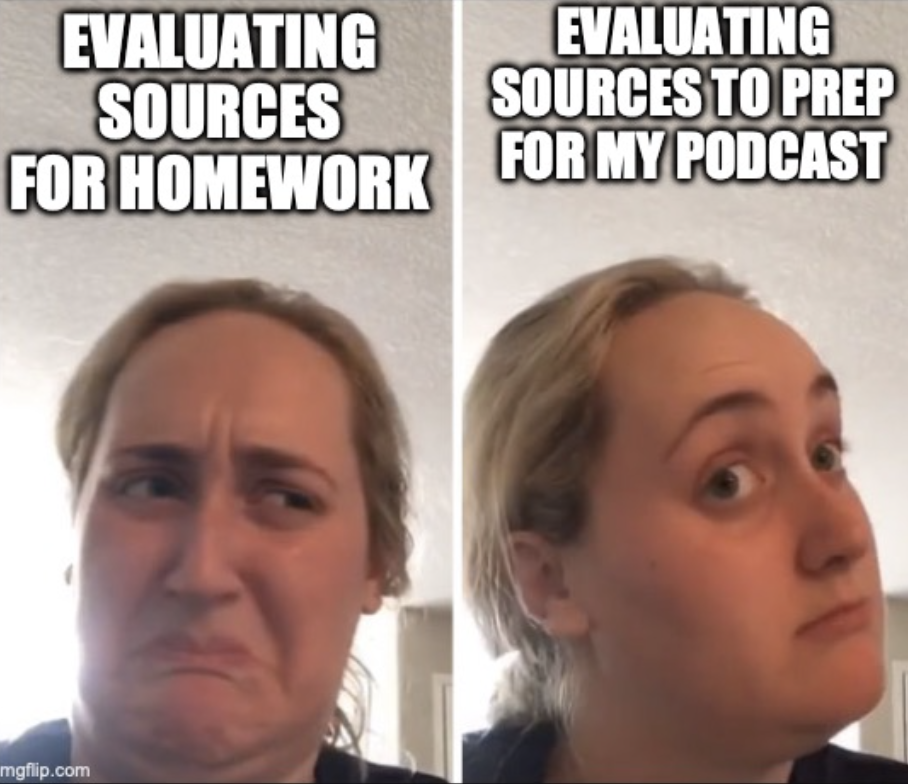
When I saw the materials, I made negative snap judgments. It’s silly, but I felt oppressed, like it sounded stuffy and restrictive. "Am I really supposed to view all assumptions as negative, as interference?" And there may have been some haughtiness: “I think about thinking a lot, from a variety of perspectives. What could revisiting Bloom’s stuff have to offer me?”
If I’m being honest, I notice that I projected a dry, “top-down,” heady view of thinking onto the coursework. I anticipated readings that described critical thinking as ideally detached from emotional, intuitive, sensory, and social experience. I imagined they would define good critical thinking as being tidy, error-free, and free of assumptions. Inhuman, practically. And so I found myself wanting to disengage right away!
I groaned a bit to my spouse, who kindly reminded me that my first glimpse at the coursework was "just one data point."
Thinking Critically is Messy and Human
I won’t describe my initial reaction as a full-blown assumption, because I intended to question my ideas before accepting them. But a hypervigilant part of me was drawn to more negative possibilities first.
As it turns out, the material is feeling well-rounded. It's already led me to some rich places:
- The readings sparked a convo with a friend about the difference between assumptions and cognitive distortions.
- The course presentation explicitly contradicts some of my initial projections (see bolded text below) by referencing a scholar and educator named Stephen Brookfield:
[Brookfield explains that] critical thinking...is not negative, and it is not just problem solving. It is not clear and neat; it does not mean total change or throwing out the past...critical thinking ensures that commitments and decisions are informed because analysis and reflection are taking place.
Another misconception about critical thinking is that it renders the thinker cold and unfeeling…When thinking critically, it’s just about impossible to eliminate emotions or divorce them from our own deeply held assumptions and beliefs. We can, however, try to understand these factors are present and analyze our own emotional reactions and those of others in the situation [emphasis added] (American College of Education, 2023).
- As I reflect, I see Brookfield portrays critical thinking as a practice to integrate into our lives, not with the goal of “total change” but with the goal of something like clarity. His view sounds like part of walking a skillful, mindful, and connected path, which are foundational concepts in the Buddhist and Taoist approaches that influence me.
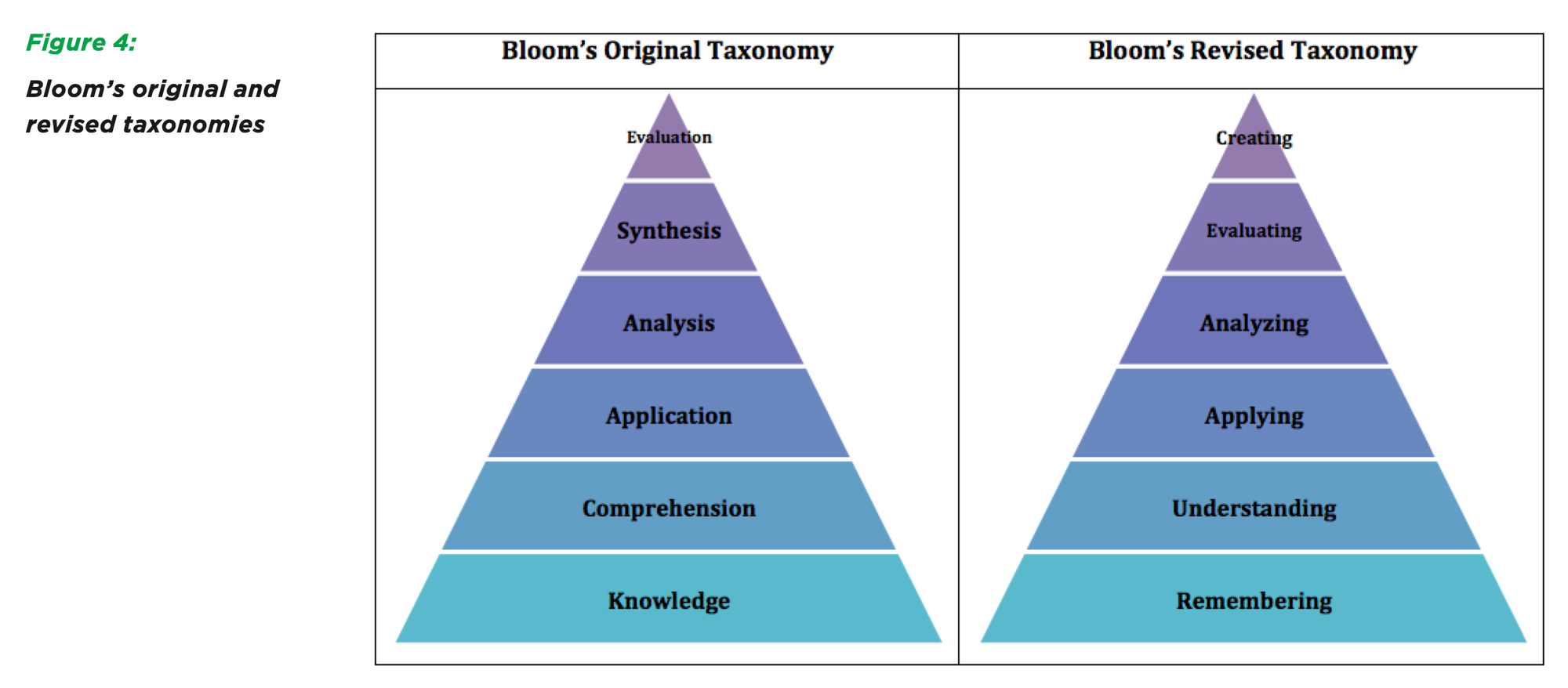
- I’ve been reminded that “Bloom’s Taxonomy of learning domains” is not a rigid view of learning processes as I feared. Originally developed in 1956 “to promote more complex thinking in education by focusing on analysis and evaluation instead of memorizing facts," it seems to be a living structure that scholars build upon over time, as suggested in this screen-shotted figure below:
Reflection
It's almost uncanny: I’m currently managing the development of an accredited training program, and I notice our work fits Bloom’s Revised Taxonomy pretty nicely. For example, we need to follow these steps, which generally build on each other:
- Remember details of past training programs and the accreditation requirements.
- Understand the expectations and our shared intentions.
- Apply frameworks for training development and project management.
- Analyze the totality of the work ahead and our need for resources.
- Evaluate the information and approaches to include and exclude.
- Create processes for working efficiently in design and delivery.
I’m someone with the tolerance for every step of the journey, including their cyclical and overlapping natures. (Really I am, despite the impatience I shared earlier).
10 Techniques I Trust (Stay Tuned!)
The project I’m leading is challenging! It’s novel. Ambitious. High-stakes. It demands new team dynamics. And it's on a tight timeline.
Sound familiar?
(Those challenges are present in so many places in our lives!)
In writing this piece, I’ve compiled a list of techniques I trust for nurturing problem-solving, positive reflection, decision-making, and communication.
They’ve emerged from many failures in leading ambitious creative projects. (I’m like a moth to a flame for that kind of work.)
Stay tuned - I’ll share those trusted techniques in an upcoming blog post.

Food for thought:
1. What techniques have you or others in your orbit found helpful in developing critical thinking skills? 2. What techniques are you noticing or working with right now?
Thanks for reading! I’d truly love to hear your thoughts on any of this.
Caroline
P.S. Want to nerd out on Bloom’s Taxonomy and its applications? Check out the 2013 eLearning Guild report I referenced above (pages 16-23 and 35-36 are pretty cool I think). I also found some powerful resources at Iowa State University’s Center for Excellence in Learning and Teaching.
P.P.S. I’d love if you shared this with someone today. (I have free, $3 and $5 monthly pricing tiers now. Wow!)